Moving to a new worship space made recording my sermons a bit challenging... but I think I have it figured out. So here is my sermon from Sunday Sep. 20, "God Loves {insert_name} More".
A Lutheran pastor seeks to reclaim the role of pastor as theologian. Excerpts and reflections meant to generate discussion and devotion are posted.
Sunday, September 20, 2015
Tuesday, September 15, 2015
Gentile Lepers and Religious Freedom
The Kim Davis issue seems to be dying down. Kim is out of jail. The same-sex couple has their wedding license. The media is slowly pulling away from the story. So I guess it's time for me to weigh in.
Sure, I've been weighing in on friends' meme posts who don't seem to be getting things technically correct (and getting little jabs here and there since they just thought something was funny). I am not a quick thinker and sometimes I fall behind in an instant media world. But I have thought a bit about the situation... a government official refusing to do something that is part of her job because of religious commitments... and I am somewhat surprised that I have not seen anything regarding Naaman, the gentile general who suffered from leprosy.
Why Naaman? It has less to do with Naaman being healed than his response following the healing. Naaman confesses the God of Elisha to be his only God.
Sure, I've been weighing in on friends' meme posts who don't seem to be getting things technically correct (and getting little jabs here and there since they just thought something was funny). I am not a quick thinker and sometimes I fall behind in an instant media world. But I have thought a bit about the situation... a government official refusing to do something that is part of her job because of religious commitments... and I am somewhat surprised that I have not seen anything regarding Naaman, the gentile general who suffered from leprosy.
Why Naaman? It has less to do with Naaman being healed than his response following the healing. Naaman confesses the God of Elisha to be his only God.
So he went down and immersed himself seven times in the Jordan, according to the word of the man of God; his flesh was restored like the flesh of a young boy, and he was clean. Then he returned to the man of God, he and all his company; he came and stood before him and said, "Now I know that there is no God in all the earth except in Israel; please accept a present from your servant." But he said, "As the LORD lives, whom I serve, I will accept nothing!" He urged him to accept, but he refused. (2Kings 5:14-16 NRSV)
Thursday, May 07, 2015
The Sacraments and Sacra-Mentality
A friend of mine, Keith Anderson, published a blog post today reflecting on some of the response following Rachel Held Evans' new book and her entrance into the Episcopal church. Much has been made that she, a former evangelical, has found value in the sacraments (for her and some in the Episcopal church, they number seven: Baptism, Eucharist, Confirmation, Confession, Ordination, Marriage, Extreme Unction (anointing and laying on hands for the sick), ... for others they number only two, Baptism and Eucharist... but that is an old debate that need not be rehashed here.) Keith rightly points out that many mainline churches are "breathing deep sighs of relief, patting themselves on the back, and smiling in self-congratulation."
Keith criticizes those who think if they just keep doing what they are doing, the young adults disaffected by the rock music, or coffee bars, or light shows, or anything else that tries to make church "cool" will find their way back to their pews with the liturgical tradition that has remained largely unchanged for decades. Keith writes:
Judging from the comments I’ve seen in the days since Held Evans’s article was posted, I’m afraid that her assertion has had the unintended consequence of reinforcing the tendency toward inertia exhibited by some Mainline ministry leaders. “See, we’re fine. We don’t need to change,” I can hear them saying. “We can keep doing what we’re doing. Let’s put on some coffee, order some new communion wafers, and wait for the young evangelicals to come pouring in.”
Good luck with that.
Such interpretations of Held Evans’s post are problematic because they reinforce our maddening fixation on matters of worship, to the detriment of extending ministry beyond our church buildings, deepening faith formation, serving the poor, and helping our neighbors.
Monday, April 20, 2015
The End is Near! Final Judgment is Upon Us!
Not THAT final judgment... those on college campuses know what I mean.
Here is a message I shared with my students this week in the weekly update for the campus ministry. I share it here as well for everyone feeling burdened by exams, papers, grades and the like...
-----
Finals are upon us... a time of focus and exams and stress and work and stress and... yeah. Finals are important to be sure. There is some need to gauge how well (or not) we have comprehended the material set before us over the course of the semester. Sometimes the exams and papers seem unfair. Sometimes they are ridiculously easy. And we prepare, hopefully diligently. We do our best and place ourselves at the mercy of the faculty and others grading us.
It is important to remember though that our ultimate worth is not determined by our GPA, or the grades we earn. We make our lives more difficult when we allow ourselves to become immersed in the messages that "EVERYTHING DEPENDS ON THIS GRADE!" Our grades are necessary and can help us reflect on our courses of study and the direction for our lives.
But at the end of the day, they are partial pictures of our lives and our identity as human beings. We are loved and deemed worthy by a God who came and dwelt with us as one of us. God's love for us shows us our worth and our value.
You are a precious child of God. period. Please never forget that... and if you think you are forgetting that during this time of judgment... call me. email me. text me. Let me remind you.
Here is a message I shared with my students this week in the weekly update for the campus ministry. I share it here as well for everyone feeling burdened by exams, papers, grades and the like...
-----
Finals are upon us... a time of focus and exams and stress and work and stress and... yeah. Finals are important to be sure. There is some need to gauge how well (or not) we have comprehended the material set before us over the course of the semester. Sometimes the exams and papers seem unfair. Sometimes they are ridiculously easy. And we prepare, hopefully diligently. We do our best and place ourselves at the mercy of the faculty and others grading us.
It is important to remember though that our ultimate worth is not determined by our GPA, or the grades we earn. We make our lives more difficult when we allow ourselves to become immersed in the messages that "EVERYTHING DEPENDS ON THIS GRADE!" Our grades are necessary and can help us reflect on our courses of study and the direction for our lives.
But at the end of the day, they are partial pictures of our lives and our identity as human beings. We are loved and deemed worthy by a God who came and dwelt with us as one of us. God's love for us shows us our worth and our value.
You are a precious child of God. period. Please never forget that... and if you think you are forgetting that during this time of judgment... call me. email me. text me. Let me remind you.
Wednesday, March 25, 2015
Goblins, Chupacabras, Moral Atheists and Immoral Christians
Many of the books I read, include mythical or fantastical creatures. Orcs, ents, elves, dwarfs, Martians, Vulcans, and the like. Most people likely believe these creatures are imaginary. Possibly people believe they exist as cryptids, a creature for which there is mere suggestion and little proof of existence... like Sasquatch or the Loch Ness Monster or the Pittsburgh Tunnel Monster, which feeds upon faster moving traffic which explains why everyone in the 'Burgh slows down immediately before entering one of our tunnels making the traffic jam cascade behind them.
In a recent spewing, Phil Robertson opined on an imaginary violent encounter with an atheist in which the atheist's wife and daughter were raped and murdered, followed by the castration of the atheist. Throughout this foul reflection, Robertson follows the old motif that the atheist cannot oppose such activity because he, being an atheist, has no basis for any moral judgment. The perpetrators of the evil against the atheist say in the midst of their attack, "But you’re the one who says there is no God, there’s no right, there’s no wrong, so we’re just having fun."
Wednesday, November 05, 2014
The View From Here: My Daughter and My Phone During Worship
A couple of weeks ago, I brought my children with me to worship. My wife was playing organ at one church. I was leading worship at Heinz Chapel for the campus ministry. How to get the kids to the zoo for the Zoo Boo that afternoon? Yes, come with me, because I was closer. No problem, although being a campus ministry service, there is no nursery available for young children, like my four-year old daughter.
So I was leading worship, but not preaching. That task fell to my Episcopalian counterpart that morning. My daughter and eight-year old son sat with me in the front pew. My oldest child, the eleven-year old boy, found a seat several rows back, behind a pillar where he could remain apart from us. And of course my daughter got antsy. So like many parents, I handed her my phone. She played a few games, but ultimately went on to her favorite activity, taking pictures. I did not count how many pictures she took, but it was quite a few. A couple of days later, I sat there deleting them. For about half an hour. At some point during the deletion marathon, I paused and realized that these photos, bad as they were, were recording the view from my daughter's perspective. Given her perch, what exactly was there to grab her attention. It appears that several things piqued her curiosity... some of them were actually service-related... but how long could anyone expect to sit still if there wasn't something to grab... and hold... his or her attention.
Some things clearly caught her eye. Things that were going on during the service or in the space around her. The most often snapped pictures though were of her feet and the immediate space around her.
Maybe we should set more youngsters, heck why not everyone, loose with cameras during worship to see what they are seeing. What holds their attention? Are there obstacles, both literal and figurative, in their way? Of course some of these things are natural for a four-year old. Not everything will be overcome. And we would hope that as they age they begin to participate more fully. We cannot make worship appeal only to four-year olds. We do not need a lowest common denominator worship. But it cannot hurt to ponder occasionally how everyone perceives our worship... Four-year olds included.
So I was leading worship, but not preaching. That task fell to my Episcopalian counterpart that morning. My daughter and eight-year old son sat with me in the front pew. My oldest child, the eleven-year old boy, found a seat several rows back, behind a pillar where he could remain apart from us. And of course my daughter got antsy. So like many parents, I handed her my phone. She played a few games, but ultimately went on to her favorite activity, taking pictures. I did not count how many pictures she took, but it was quite a few. A couple of days later, I sat there deleting them. For about half an hour. At some point during the deletion marathon, I paused and realized that these photos, bad as they were, were recording the view from my daughter's perspective. Given her perch, what exactly was there to grab her attention. It appears that several things piqued her curiosity... some of them were actually service-related... but how long could anyone expect to sit still if there wasn't something to grab... and hold... his or her attention.
Countless shots of her feet and/or the floor
The pew, my jacket and the stained glass
Her foot again... but somehow turned it into an animated gif. How did she do that?
Me reading along with the lector
Brother... who appears put off by the close up
The lector... again.
Brother would not do well with paparazzi
Worship selfie
Something caught brother's attention
Sermon time
Hymnal racks
Woodwork of Heinz Chapel, pulpit, chancel and altar
Maybe we should set more youngsters, heck why not everyone, loose with cameras during worship to see what they are seeing. What holds their attention? Are there obstacles, both literal and figurative, in their way? Of course some of these things are natural for a four-year old. Not everything will be overcome. And we would hope that as they age they begin to participate more fully. We cannot make worship appeal only to four-year olds. We do not need a lowest common denominator worship. But it cannot hurt to ponder occasionally how everyone perceives our worship... Four-year olds included.
Tuesday, October 14, 2014
Holy Ground at 35,000 feet
A couple of weeks ago I had a meeting in California for campus ministry that demanded a great deal of focus and attention, which of course, between that and the travel with short turn around, let me drained. So I was looking forward to the return trip where I could become anonymous and delve into the page of notes I had made for my upcoming sermon.
Because of the demands of the meeting, I had failed to check-in online exactly twenty-four hours to the flight so I was dealt a lousy boarding number. While I had managed to score a window seat on the flight out, I knew I wouldn't even get an aisle seat. I was going to be stuck in the middle.
My strategy then was simply to grab the first available center seat I came upon on on the side of the plane that would be facing north during the flight, since the north side would not have the sun shining on it. That side of the plane is cooler, at least in my mind. As I walked back the aisle, I saw my target, dropped my laptop bag in it so I could work, and stowed my shoulder bag. And then I discovered to my horror, that the guy I would be sitting next was a guy who had been loudly talking with another guy at the gate about their Italian heritage. Everyone can recognize an evangelist, whether religious or not. This guy was an Italian evangelist. His identity was thoroughly steeped in the history and culture of Italy and he was happy to talk to anyone about it. And I dreaded this.
Because of the demands of the meeting, I had failed to check-in online exactly twenty-four hours to the flight so I was dealt a lousy boarding number. While I had managed to score a window seat on the flight out, I knew I wouldn't even get an aisle seat. I was going to be stuck in the middle.
My strategy then was simply to grab the first available center seat I came upon on on the side of the plane that would be facing north during the flight, since the north side would not have the sun shining on it. That side of the plane is cooler, at least in my mind. As I walked back the aisle, I saw my target, dropped my laptop bag in it so I could work, and stowed my shoulder bag. And then I discovered to my horror, that the guy I would be sitting next was a guy who had been loudly talking with another guy at the gate about their Italian heritage. Everyone can recognize an evangelist, whether religious or not. This guy was an Italian evangelist. His identity was thoroughly steeped in the history and culture of Italy and he was happy to talk to anyone about it. And I dreaded this.
Tuesday, September 02, 2014
Campus Ministry... Why I Do It...
Sometimes in campus ministry, just like in regular ministry, we don't see the effect on people's lives. With campus ministry it is a little more exacerbated, since we usually only have a person around for four years or less. But every once in a while, God's presence shoots across your field of vision so that you want to take off your shoes because you know you are on holy ground, and you are humbled because you were part of it.
One of our alums, Kelsey, is in Madagascar for a year of Young Adults in Global Mission. She has begun a blog to let folks know of her experiences... the blog post that I am sharing might be the best way to explain why I love campus ministry and the type of work that goes on there.
Thursday, February 06, 2014
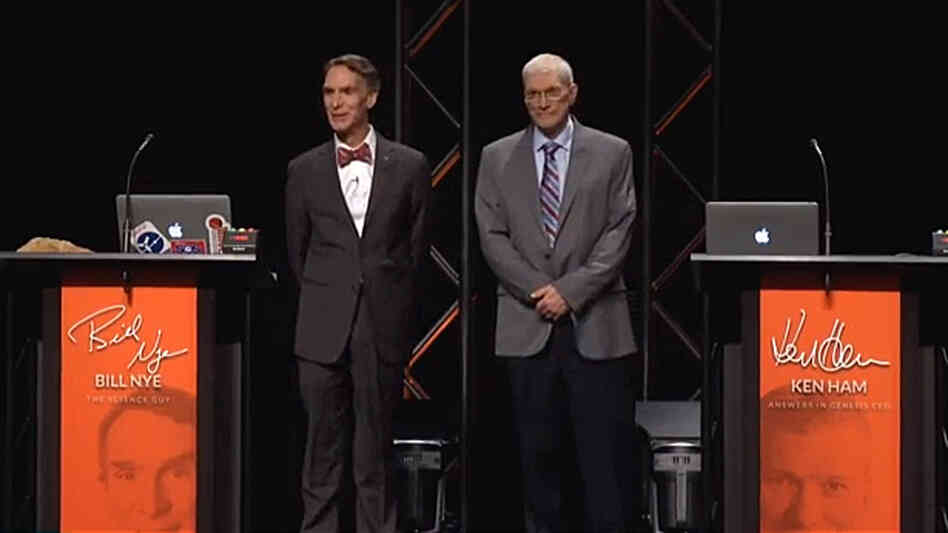
Ham on Nye: Sandwiching Evolution and Creationism Together
How do you get creationists and scientists together in the same room? Bring leading spokespeople from each camp for a debate. Last night, as many know, Bill Nye, the appropriately named "Science Guy" and Ken Ham, the founder of the Creation Museum in Northern Kentucky squared off in a debate of sorts, to argue their case for creationism or evolution. (The debate can be watched here)
To be honest, the event felt less like a debate and more like two ships passing in the night, like two parts of a sandwich that wouldn't come together no matter how much one chewed them. Not much of a surprise, I guess. Debates work best when the conversation takes place between people who share a common matrix of beliefs, even while they hold disagreements, even significant ones at that. Ham and Nye don't have disagreements, they are in fundamentally different universes. How each viewed science was at issue. Nye clearly supported the scientific process as it is taught and practiced in research. Ham looked at science as only a crutch for finding support of his own view. If anything supported the standard scientific model over the creationist model, Ham found ways to dismiss or discount the finding rather than question his own model.
Monday, January 13, 2014
Pastor Dad: Questions in the Dark
My wife and I have from very early on with our kids created a rather involved bedtime ritual. All of our prayers are sung, and with the exception of the first, a variation of "Now I Lay Me Down to Sleep" sung to "Twinkle Twinkle Little Star", based on elements of the compline liturgy. This bedtime liturgy evolved out of a first child who would not stay in a toddler bed alone. Many nights I would lie on the floor with my head resting on his mattress until he would fall asleep. In that time, he seemed to soothe easiest if I sang. I had lots of tunes that I would use, but I fell into the habit of singing parts of compline because I was praying it fairly regularly. The traditional tune of "All Praise to Thee My God This Night" fit the moment. And the verse which precedes the nunc dimitis, "Guide us waking, O Lord, and guard us sleeping..." even though sung to Gregorian chant was perfect before we eventually said the Lord's Prayer.
Saturday, January 11, 2014
Church of the Geek
Another project I have been working on for the past six months or so... The Church of the Geek Podcast, with the Rev. David Hansen.
Our sixth episode went up tonight. "The Ascendancy of the Geek" What happens when the outsider moves to the inside? You can find our reflection here.
Monday, January 06, 2014
Advice for Atheist Churches
A friend pointed out an article over at the CNN Religion Blog about Atheist Churches... and of course, their almost immediate fracture after seeking to spread.
A brief excerpt from the article:
In October, three former members of Sunday Assembly NYC announced the formation of a breakaway group called Godless Revival.
“The Sunday Assembly,” wrote Godless Revival founder Lee Moore in a scathing blog post, “has a problem with atheism.”
Moore alleges that, among other things, Jones advised the NYC group to “boycott the word atheism” and “not to have speakers from the atheist community.” It also wanted the New York branch to host Assembly services in a churchlike setting, instead of the Manhattan dive bar where it was launched.
Jones denies ordering the NYC chapter to do away with the word “atheism,” but acknowledges telling the group “not to cater solely to atheists.” He also said he advised them to leave the dive bar “where women wore bikinis,” in favor of a more family-friendly venue.
The squabbles led to a tiff and finally a schism between two factions within Sunday Assembly NYC. Jones reportedly told Moore that his faction was no longer welcome in the Sunday Assembly movement.
The split seems to be fueled by a fundamental disagreement in organization and purpose. The emergence of atheism into a more accepted existence has shown that Atheism is not in fact monolithic. With even fewer doctrinal guardians than American mainline protestants, these atheist assemblies now have to figure out who they are when engaging the larger community.
In the midst of this discussion, I cannot help but see similarities from the early church. One of the questions Engelhart asks in the blog is if disbelief is enough to hold the Atheist Churches together. I say "No." Why? Because belief was not enough to keep the Christian Church together. I suppose it is more accurate to say that "Belief in belief" is not enough, borrowing from Stanley Hauerwas' comments that American religion is about belief in belief. (See this 2010 article in the Guardian as an example) While the early church lived in the Roman Empire, an illegal religion sometimes persecuted harshly, the early church could live with any profession of "Jesus is Lord!" Once they were legitimized by Constantine, the cracks in the belief began to show. Belief was not enough to hold them together. Schism and heresy began to split the Christian Church apart as leaders began to hash out what they believed about this Jesus guy and why he mattered. Throughout the history of the Christian Church, the followers of Jesus have shown with increasingly regularity that we are far more comfortable perpetrating the brokenness, sometimes over substantial matters like fundamental questions of who Jesus is, and more often over irrelevant questions like the color of the carpet in the sanctuary. What ultimately keeps the Christian Church together is Jesus, that resurrected God-Man who still shows up in our gatherings, even when we get him all wrong. He shows up in Word and Sacrament and in our life together so we can practice the grace he gives us. Belief alone leaves us Christians fractured still. It is no small miracle that any Christian Church has survived for two millennia. In the same way, I do not believe disbelief (or maybe disbelief in belief?) will hold the Atheist Church together. they will need something more.
But a bigger issue came to mind as I read the article. The Atheist Church is copying the model of the Christian Church, a model many Christian Church leaders are wrestling with because it seems outdated. The gathering to listen to people talk about stuff might be interesting (might not since not every sermon in a Christian Church is necessarily interesting to everyone), but one of the things that the Christian Church is facing, is how to engage people in those moments. And many religious leaders are altering the way the Christian Church deals with that time. We no longer live in a period where people will sit for the "Tell me" but are looking for "Show me." Don't just talk about praying. Pray. That time is being opened up for something more participatory and experiential.
The Atheist Church needs to discern questions of identity, meaning and purpose. And they should not just duplicate the model of the Christian Church. Be true to what you believe and live into that. Make your gatherings reflect that. Even Engelhart recognizes something is amiss in this new Atheist Church movement. She wrote:
Instead of a thoughtful sermon, I got a five-minute Wikipedia-esque lecture on the history of particle physics.
Instead of receiving self-improvement nudges or engaging in conversation with strangers, I watched the founders fret (a lot) over technical glitches with the web streaming, talk about how hard they had worked to pull the service off, and try to sell me Sunday Assembly swag.
What’s more, instead of just hop, skipping and jumping over to a local venue, as I once did, I now had to brave the tube and traverse the city.
Perhaps something was lost. in the move to a larger, organized effort. At a time when people are decrying organized religion, perhaps organized atheism is not any better.
Why do I care though? Why am I bothering to offer advice to atheists? Most likely because I believe the God I follow in Jesus is not the sort who observes boundaries. He doesn't just stick with his own people. He is out there. And if the Atheist Church has anything good to offer the world, it will be because Jesus is there since nothing good can come apart from him. And maybe, we in the Christian Church might learn something more about what Jesus is up to in the process.
Friday, January 03, 2014
Church-geeking out over 2013
Here is a blog post I did for the Church of the Geek podcast page, where I look over 2013 geek/church events... and even manage to invent a new word.
Read it here.
Happy New Year everyone!
Read it here.
Happy New Year everyone!
Monday, November 11, 2013
The Lord's Prayer: Tipping Point
A colleague over on that Book of Faces shared an article about a waitress who received an evangelical tract instead of a tip. It had been cleverly designed to appear like a ten dollar bill, but the waitress quickly realized that what she had was not money at all. (see the pictures here)
Several things strike me as wrong about this.
First, it is incredibly presumptuous to leave a tract that basically says you know the spiritual condition of a person you interacted with for mere minutes. Evidently, being saved gives one super powers to determine this. Or not.
Second, it is a poor witness. Reducing Christianity to a pie-in-the-sky vision of eternal life leaves no way to discuss the love God has for this person right now. This person needs to put food on the table and has various needs that are now not fulfilled. Sure, as the tract says, "Some things are better than money." But few waitresses I have worked with are doing that job because the money is so damn good.
Third, it is injustice. For whatever reason, our society perpetuates the myth that tipping is something people give as an extra... a bonus for good or bad service. What we must realize of course is that the servers' wages are almost exclusively tips. The minimum wage for such workers is abysmally low, and hasn't kept up with federal minimum wage law very much at all. Don't muzzle the ox as it treads grain, and tip your waitstaff twenty percent at least. Every worker deserves to be paid.
The tipping point for me in this discussion (yes, pun most definitely intended) is the Lord's Prayer. I realize few Lutherans would ever pull such a crappy move, because we don't generally hand out tracts (The ability to share one's faith might also be called into question... but tract leaving is definitely not about sharing one's faith). But there is also a place to turn to consider our restaurant manners in the light of our faith, the Lord's Prayer. More specifically, "Give us this day our daily bread."
When we consider all that must happen for us to receive that meal, we cannot consider the waitress a dispensable link in the chain. To faithfully pray as our savior taught us, we are to give thanks for everything required to bring us our daily bread. And just as we would not expect the supermarket to take a "Get Saved" tract in exchange for our groceries, neither should we leave it for a person seeking to live off of that job. Being thankful is not just a state of mind, but an active response. If you feel it necessary to leave a tract, make sure you also tip well. If you cannot afford to tip, you cannot afford to eat out.
Saturday, November 02, 2013
New Project: Church of the Geek
For the past few months, David Hansen and I have been creating a new podcast: The Church of the Geek, where we talk about things in the Geek-iverse and (usually) how it intersects with the life of faith.
After getting a few shows in the queue, we have officially launched Episode 1! (have no fear, there will be no Jar Jar Binks in THIS Episode 1)
In a few days it will be listed on iTunes. Until then you can listen to the podcast over at our site: http://geekchurch.blogspot.com/
Listening on a non-iTunes podcast platform? This is our RSS Feed.
Find us on Twitter @GeekChurch
And on Facebook: http://www.facebook.com/GeekChurch
We hope you enjoy listening!
Thursday, October 24, 2013
Apart from Christ
It is hard to imagine a soup kitchen turning anyone away from helping in the ministry. But I was rather shocked to read in the RNS Religion News Roundup today that a soup kitchen in Spartanburg, SC turned away volunteers. Why? Because they were atheists. (Whole story here)
In the story above, the director of the kitchen holds stereotypical beliefs regarding atheists... She mentions the devil being with them as they hand out care packages across the street. It seems she holds a very narrow understanding of the John 15 paraphrase, "Nothing good can be done apart from Christ." There are those who believe that if people are not Christian, even if they are doing the exact same charitable work that Christians engage in, it is not a good work.
This type of thinking leads directly, in my mind, to an inwardly focused, type of mission where the only good work that can be done is by Christians, and then done only within the church. The church becomes the guardian of Christ, keeping him in our little boxes.
However, the reality is far greater. It is Christ who is out and about, working in places where we might not be aware. If we see something that certainly looks good, then Christians should go investigate what Christ is doing. Maybe the people who are doing the good aren't aware that Christ is in their midst.
The soup kitchen is missing a prime opportunity to allow people who disavow God's existence to participate in Christ's mission, perhaps causing one of them to experience a hint of God's presence. Instead, they are faced with rejection and spite, further reinforcing the notion of Christians as hypocrites. It makes me wonder at times who is further apart from Christ.
In the story above, the director of the kitchen holds stereotypical beliefs regarding atheists... She mentions the devil being with them as they hand out care packages across the street. It seems she holds a very narrow understanding of the John 15 paraphrase, "Nothing good can be done apart from Christ." There are those who believe that if people are not Christian, even if they are doing the exact same charitable work that Christians engage in, it is not a good work.
This type of thinking leads directly, in my mind, to an inwardly focused, type of mission where the only good work that can be done is by Christians, and then done only within the church. The church becomes the guardian of Christ, keeping him in our little boxes.
However, the reality is far greater. It is Christ who is out and about, working in places where we might not be aware. If we see something that certainly looks good, then Christians should go investigate what Christ is doing. Maybe the people who are doing the good aren't aware that Christ is in their midst.
The soup kitchen is missing a prime opportunity to allow people who disavow God's existence to participate in Christ's mission, perhaps causing one of them to experience a hint of God's presence. Instead, they are faced with rejection and spite, further reinforcing the notion of Christians as hypocrites. It makes me wonder at times who is further apart from Christ.
Monday, September 30, 2013
We Are Family: Baseball, Exile and the Communion of Saints
I had a great Great Aunt. She was like a third grandmother to me. She supported me in many ways. She helped me get to Germany as an exchange student after my freshman year of high school. She sent me money each month during college along with a note to "Have fun!" Evidently, she was worried I would be far too serious and engaged in my studies to do anything fun... no worries there. She was so important in my life, that my daughter is named after her (as well as my wife's grandmother, who also shares the same name).
But what I remember probably most of all is baseball. She loved the Pittsburgh Pirates. And she instilled that in me as well. She got me a membership to the Dave Parker Fan Club. She gave me an autographed baseball that she was given, with almost the entire team on it. She also would take my brother and I, along with her friend and her nephew to Sunday afternoon baseball games. I remember the first time she asked me to go. I went to Sunday school but skipped out on worship, so we could make it to the game on time. It was an amazing time whenever we went. Those trips remain storied adventures.
Thursday, April 25, 2013
Hearing Voices -- Sermon from the 4th Sunday of Easter
Jesus says his sheep hear his voice. In the midst of voices that try to separate us from God and neighbor, Jesus continues to call to us because he knows and loves.
An excerpt:
Read the whole thing here.
Or listen to it.
Podcast Powered By Podbean
An excerpt:
This is not to say that it is impossible to understand Jesus’ voice. We are indeed gifted with the ability to hear his gracious words. But they must be set among his whole teaching of God’s Reign and grace. And we must ask and not assume that everything that sounds good and pious is in fact. Jumping in and accepting those voices without discernment is perilous, but Jesus promises that he will be in our midst helping us discern his words from others...
Read the whole thing here.
Or listen to it.
Podcast Powered By Podbean
Wednesday, April 17, 2013
Must We Protect God's Sovereignty?
Spurred on by events in Boston, but also through interaction with others throughout the years, often at the death of loved ones, I have been pondering the people who feel the need to lift up God's sovereignty. These are the "It was God's will" voices. Everything that happens they refuse to question, going to great lengths in some circumstances to protect God's sovereignty… and sound ludicrous in the process. They reduce all causes in the world down to one and only one, God's will, as if there were no other agents at work in the world. But there are. The rebellious principalities and powers just to name two.
I turned to David Bentley Hart's The Doors of the Sea today and read it in its entirety. It is a short work from 2005 in response the tsunamis of Christmas day 2004. While inspired by that disaster, his work is not applicable to that event alone. Hart seeks to deal with tragedy in the world, set alongside God's omnipotence and goodness.
Throughout Hart seeks to answer both atheistic objections as well as refute Christian voices who seem to give life to a false image of God, particularly those who say God will evil. Hart absolutely refuses to allow this image. In the latter half of the book, he speaks of divine providence. He writes,
I turned to David Bentley Hart's The Doors of the Sea today and read it in its entirety. It is a short work from 2005 in response the tsunamis of Christmas day 2004. While inspired by that disaster, his work is not applicable to that event alone. Hart seeks to deal with tragedy in the world, set alongside God's omnipotence and goodness.
Throughout Hart seeks to answer both atheistic objections as well as refute Christian voices who seem to give life to a false image of God, particularly those who say God will evil. Hart absolutely refuses to allow this image. In the latter half of the book, he speaks of divine providence. He writes,
What then, one might well ask, is divine providence? Certainly all Christians must affirm God's transcendent governance of everything, even fallen history and fallen nature, and must believe that by that governance he will defeat evil and bring the final good of all things out of the darkness of "this age." It makes a considerable difference, however --nothing less than our understanding of the natureof God is at stake -- whether one says that God has eternally willed the history of sin ad death, and all that comes to pass therein, as the proper or necessary means of achieving his ends, or whether one says instead that God has willed his good in creation from eternity and will bring it to pass, despite their rebelion, by so ordering all things toward his goodness that even evil (which he does not cause) becomes an occasion of the operations of grace. And it is only the latter view that can accurately be called a doctrine of "providence" in the properly theological sense; the former view is mere determinism. (Hart, p. 82)
Monday, April 15, 2013
The Song of the Lamb -- 3rd Sunday of Easter
Reading:
Then I looked, and I heard the voice of many angels surrounding the throne and the living creatures and the elders; they numbered myriads of myriads and thousands of thousands, singing with full voice, “Worthy is the Lamb that was slaughtered to receive power and wealth and wisdom and might and honor and glory and blessing!” Then I heard every creature in heaven and on earth and under the earth and in the sea, and all that is in them, singing, “To the one seated on the throne and to the Lamb be blessing and honor and glory and might forever and ever!” And the four living creatures said, “Amen!” And the elders fell down and worshiped. (Rev. 5:11-14)
The book of Revelation can be read in many different ways, one of which is to read it as a liturgical manual. The angels begin the song of the Lamb and invite us to join in.
There is no manuscript this week.
You can listen to the whole thing.
Podcast Powered By Podbean
Then I looked, and I heard the voice of many angels surrounding the throne and the living creatures and the elders; they numbered myriads of myriads and thousands of thousands, singing with full voice, “Worthy is the Lamb that was slaughtered to receive power and wealth and wisdom and might and honor and glory and blessing!” Then I heard every creature in heaven and on earth and under the earth and in the sea, and all that is in them, singing, “To the one seated on the throne and to the Lamb be blessing and honor and glory and might forever and ever!” And the four living creatures said, “Amen!” And the elders fell down and worshiped. (Rev. 5:11-14)
The book of Revelation can be read in many different ways, one of which is to read it as a liturgical manual. The angels begin the song of the Lamb and invite us to join in.
There is no manuscript this week.
You can listen to the whole thing.
Podcast Powered By Podbean
Subscribe to:
Posts (Atom)


.jpg)